Mustafa Saglam Professional Arabic Qanun MKA-4 By Mustafa Saglam

Professional Arabic Qanun MKA-4 By Mustafa Saglam

Regular price $1,999.00 Sale price$1,299.00 Save $700.00
/
Shipping calculated at checkout.

  • In stock, ready to ship
  • Backordered, shipping soon

The Professional Arabic Qanun MKA-4 is Mustafa Sağlam's Arabic-tradition build, made by hand in his Ankara workshop — plane wood (chinar) soundboard, 26-course string layout (74 strings total), tuned to the standard D-D' Arabic maqam scale, with the mandal layout used in Egyptian and Levantine takht ensembles. Same workshop, same hands, and the same quality standard as the MK-404 / MK-123 Turkish kanuns and the MKE-5 Armenian kanun, but built around the different musical system that defines Arabic maqam playing.

Quick Recommendation — Buy the MKA-4 if you play Arabic maqam (Egyptian, Lebanese, Syrian, Iraqi, Palestinian repertoire). For Turkish makam playing, see the MK-404 ($1,299) or MK-123 ($1,299) — same maker, same Ankara workshop. For Armenian-system mandal layout, see the MKE-5 ($1,299).

Sound demo

Why Arabic kanuns are built differently

Arabic maqam music uses a different default tuning (D-D' instead of Turkish A-A') and a different approach to interval shifting. Where Turkish kanuns use several mandals per course for koma-level precision (because Turkish makam music transitions through many fine-tuned intervals), Arabic kanuns typically use fewer mandals per course with broader steps — better matched to the way Egyptian and Levantine players shift between maqamat. Putting Turkish tuning on an Arabic kanun (or vice versa) is technically possible but fights the instrument's natural pitch behavior.

Best for

  • Arabic maqam students and performers (Egyptian, Lebanese, Syrian, Palestinian)
  • Takht ensemble players (oud, kanun, riq, nay, violin)
  • Recording artists in Arabic classical, religious, or popular music
  • Conservatory students enrolled in Arabic music programs
  • Cross-genre players blending Arabic kanun into jazz/fusion

Specifications

Maker Mustafa Sağlam — Ankara, Türkiye
Tradition Arabic
Tuning D-D' (Arabic maqam standard)
Soundboard (face) Plane wood (chinar)
Courses (sıra) 26
Total strings 74
Mandal system Arabic layout
Strings PVF nylon
Includes Hardshell case, replacement strings, mandal-tightening key, fingerpicks
Country of origin Ankara, Türkiye

MKA-4 vs other Sala kanuns

Model Price Tuning Layout Maker Notes
MK-123 $1,299 Turkish A-A' Turkish 26-mandal Mustafa Sağlam · Ankara Turkish — plane wood (chinar) body
MK-404 $1,299 Turkish A-A' Turkish 26-mandal Mustafa Sağlam · Ankara Turkish — walnut + spruce body
MKA-4 $1,299 Arabic D-D' 26 sıra · 74 strings Mustafa Sağlam · Ankara Built for Arabic maqam, plane wood face
MKE-5 $1,299 Armenian 26 sıra · 74 strings Mustafa Sağlam · Ankara Armenian repertoire, plane wood face
MSK-4 $3,999 Turkish Premium build Miras · İstanbul Passive pickup + 1/4" jack

FAQ

Can I tune the Arabic MKA-4 to Turkish A-A'?

Technically yes, but you'd fight the mandal layout. Arabic kanuns are mandal-engineered around D-D' tuning — shifting to Turkish tuning means many of the mandals point to interval positions that don't match what you'd play in Turkish makam. Buy a Turkish kanun for Turkish music.

Where is the MKA-4 made?

In Mustafa Sağlam's workshop in Ankara, Türkiye. From there it's shipped to Sala Muzik's setup workshop in Istanbul/Üsküdar for inspection and final setup, then out to you worldwide.

How many strings does the MKA-4 have?

74 strings across 25 courses (sıra). Plane wood (chinar) soundboard.

Is the MKA-4 suitable for Iraqi maqam?

Yes. Iraqi maqam shares the Arabic D-D' tuning convention, though some Iraqi players prefer slightly modified mandal layouts. Contact us if your repertoire is heavily Iraqi-focused and we can advise.

How long to learn the kanun?

1-2 years daily practice to play confidently. The mandal system adds complexity beyond pitch — you change interval positions mid-piece for each makam transition.

Do you ship internationally?

Yes, worldwide. Kanuns ship in double-walled custom crates, foam-cushioned, fully insured DHL or FedEx Express. EU/US arrive 5-9 business days.

How often replace strings?

Casual practice: 6-12 months. Daily practice/performance: 3-6 months. Replace by course (not individual string) so tonal balance stays consistent.

Crafted in AnkaraBy Mustafa Sağlam
Worldwide shippingCustom-crated, fully insured
1-year warranty+ direct luthier support
10-day returnsFrom delivery, original condition

When Will I receive my order?

Free shipping to the United States takes 3–5 business days.

For destinations outside the United States, free shipping takes 3–5 weeks and DHL shipping takes 2–4 days.

Does Sala Muzik Ship Internationally?

We currently ship anywhere in the World.

This site is protected by hCaptcha and the hCaptcha Privacy Policy and Terms of Service apply.


Recently viewed

  • 5 stars: 2 (67%)
  • 4 stars: 1 (33%)
  • 3 stars: 0 (0%)
  • 2 stars: 0 (0%)
  • 1 star: 0 (0%)
ר
רחמים יעקובוב

### Professional Arabic Qanun MKA-4 By Mustafa Saglam

I received the qanun in good condition, with no visible defects or damage from shipping. It arrived inside a hard case with several foam pieces for protection, with additional cardboard packaging outside. The string tension had not been reduced before shipping, and naturally the instrument needed tuning after arrival.

### The Instrument and Its Sound

The qanun itself is beautiful, and overall the sound is good. It has 26 courses, from low G to high D. The lowest G has two strings rather than three.

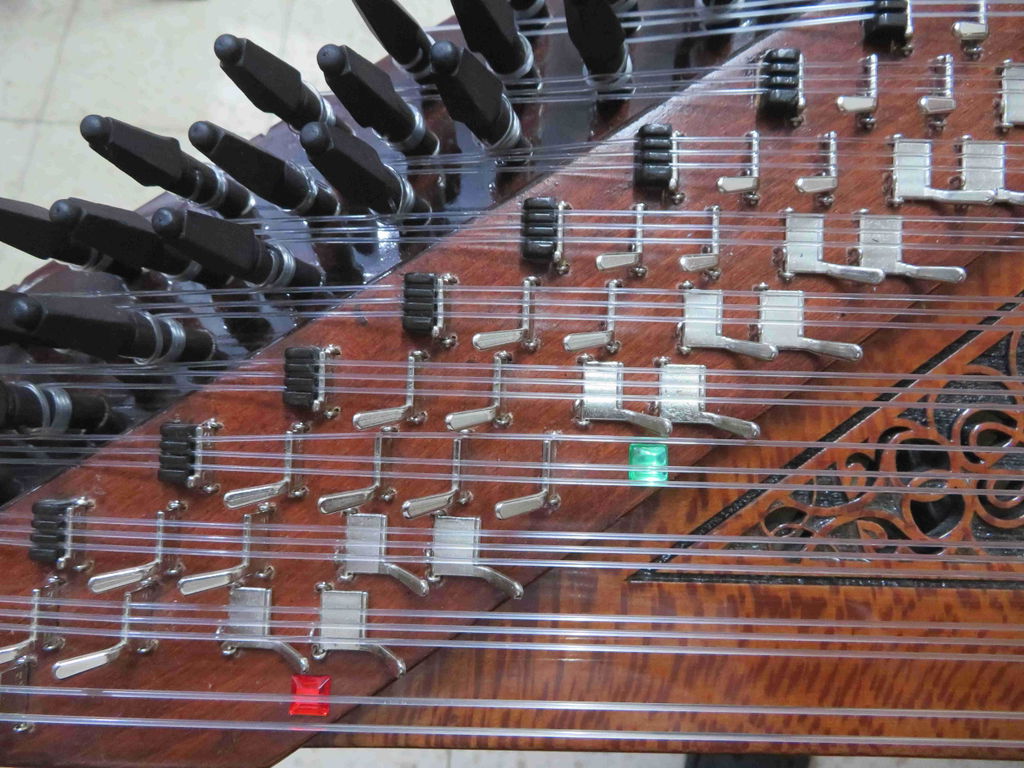
The middle register sounds very beautiful, and this is one of the strongest parts of the instrument in my opinion. The bass register also sounds quite good, but it is relatively quiet. The lowest G in particular feels somewhat loose and is therefore weak in volume.

I suspect that the bass strings may be slightly too thin for this Arabic tuning. It is possible that they are better suited to a Turkish qanun, where the tuning is about one whole tone higher, although this is only my assumption.

Several bass notes also have annoying buzzing. Interestingly, on some courses the buzzing appears when all the mandals are raised, while on others it appears when all the mandals are lowered. This may also be related to string tension, but I have not been able to determine the exact cause with certainty.

On some bass courses, when I pluck strongly, the upper string out of the three can jump over the mandals and get stuck outside them. This may also be related to tension that is too low. Since bass strings are longer and move more when plucked, insufficient tension may allow the string to move far enough to jump over the mandals.

The highest three or four notes are less satisfying to my ear. They sound more like a sharp impact on wood and less like the clear, bell-like tone I have heard from some other professional qanuns.

### Hard Case

The hard case is functional, but in my opinion it is too minimal for an instrument at this level. There is no compartment for the tuning wrench, rings, and picks, so these accessories have to be stored separately, which is inconvenient.

More importantly, the qanun is not held firmly enough inside the case. When the case is turned or moved while being carried, the instrument can shift and knock against the inside.

I would expect soft, fitted padding that holds the instrument firmly and securely in place, similar to what is commonly found in good hard cases for violins or guitars.

### Stand

The stand supplied with the qanun is very good. It is strong, stable, well built, and comfortable to use. It is quite heavy, but that is understandable considering its stability.

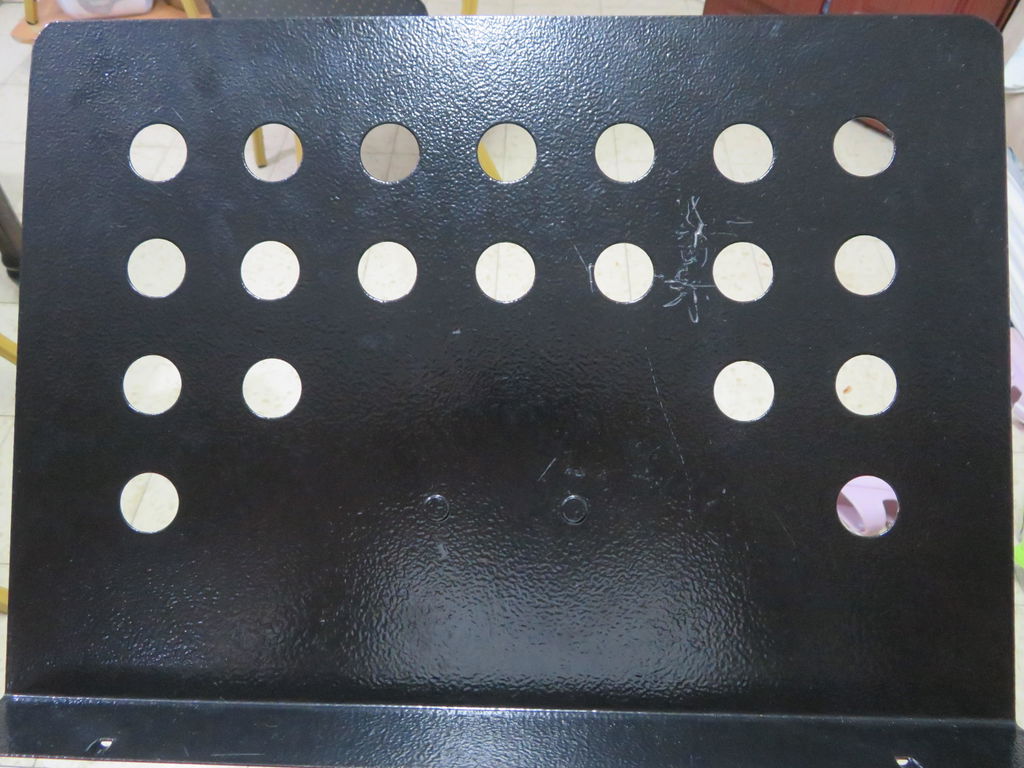
However, it was not packed for shipping with foam or bubble wrap, and the music holder part arrived with scratches. I am attaching a photo of this.

My other criticism is that when the stand is disassembled for transport, several screws and rings become completely separate pieces and could easily be lost. It would be better if these parts remained attached to the stand.

### Rings and Picks

The qanun comes with Mustafa Saglam rings and picks. I also ordered additional rings and picks as spares, which were not Mustafa Saglam products.

The additional picks were lower in quality than the original Mustafa picks. On the other hand, I actually found the additional rings to be better than the original Mustafa rings that came with the qanun.

### Overall

Overall, I like the appearance of the qanun and especially the beautiful sound of the middle register. The instrument has a lot of potential.

In my opinion, there is room for improvement in the bass string setup, the buzzing, the highest notes, the packing and protection of the stand during shipping, and especially the design and internal padding of the hard case.

S
S
Professional Arabic Qanun MKA-4 By Mustafa Saglam

i got one of these during a sale, i am new to qanun, and the staff is very helpful. I had trouble with the tuning of the instrument, and they gave me good advice on it. Not to mention the product was very well packaged and was delivered fast to me in great condition. The instrument is great, very well made, the after service is well provided. Though the design looks different from the one in the photo, (i guess that's due to the unique craftwork of the instrument), the quality is very up to standard. If you want to get a qanun i would recommend to get it from here.

s
shakir jamil

Very good thanks a lot