
Jak nastroić oud: stroje arabskie i tureckie
Najbezpieczniejszy sposób na nastrojenie oudu to ustalenie jego ostrunienia i przewidzianego stroju, zanim przekręcisz kołek. Większość współczesnych oudów ma jedenaście strun ułożonych w pięć podwójnych chórów oraz jedną pojedynczą strunę basową, choć niektóre mają sześć chórów podwójnych. Oudy tureckie i arabskie często korzystają z odmiennych systemów wysokości dźwięku, a struny założone do jednego z nich mogą nie znieść drugiego.
Ten przewodnik podaje dźwięki od chóru o najniższym brzmieniu do chóru o najwyższym brzmieniu. Taka kolejność pozwala uniknąć zamieszania, jakie wywołują zwroty w rodzaju „górna struna” i „dolna struna”, które mogą odnosić się albo do wysokości dźwięku, albo do położenia. Używaj tunera chromatycznego, szarpaj po jednym chórze naraz i do każdego docelowego dźwięku podchodź stopniowo od dołu.

Jaki jest standardowy strój oudu?
Nie istnieje jeden strój wspólny dla wszystkich tradycji oudowych. Dwa praktyczne punkty wyjścia to strój arabski C2–F2–A2–D3–G3–C4 i strój turecki D2–A2–B2–E3–A3–D4, zapisane tu od chóru najniższego do najwyższego.
| System | Od najniższego do najwyższego | Typowe zastosowanie |
|---|---|---|
| Oud arabski | C2–F2–A2–D3–G3–C4 | Szeroko stosowany współczesny arabski układ sześciochórowy |
| Oud turecki | D2–A2–B2–E3–A3–D4 | Powszechny współczesny turecki układ sześciochórowy |
| Arabski pięciochórowy | F2–A2–D3–G3–C4 | Tradycyjny układ bez najniższego chóru C |
To powszechne stroje odniesienia, a nie uniwersalne zasady. Stroje irackie, syryjskie, egipskie, tureckie i indywidualne stroje koncertowe mogą się różnić. Zanim zmienisz system, zapytaj budowniczego albo sprzedawcę, do jakiego stroju i do jakiej grubości strun zbudowano instrument.
Słowo o numerach oktaw
Sama litera nie wystarczy: C2 i C3 dzieli oktawa. Wiele aplikacji tunerowych pokazuje numery oktaw, ale nie wszystkie. Jeśli aplikacja wyświetla tylko nazwę dźwięku, porównaj brzmienie z pewnym dźwiękiem odniesienia i upewnij się, że nie naciągasz chóru basowego w stronę tej samej litery w złej oktawie.
Jak rozpoznać chóry strun i kołki
Chór strun w oudzie to jedna jednostka gry. Większość chórów zawiera dwie struny nastrojone unisono; najniższy chór basowy to zwykle pojedyncza struna. Zaczynając od najgrubszego, najniżej brzmiącego chóru, licz w stronę najcieńszego, najwyżej brzmiącego.
Nie zakładaj, że kołek najbliższy strunie właśnie ją napina. Struny krzyżują się wewnątrz główki, a układy kołków bywają różne. Prześledź wzrokiem każdą strunę od mostka, przez siodełko, aż do jej kołka, zanim zaczniesz stroić. Przekręcenie niewłaściwego kołka pod naciągiem to jeden z najszybszych sposobów na zerwanie sąsiedniej struny.
Jak nastroić oud krok po kroku
Strój instrument w cichym pomieszczeniu, trzymając oud w pozycji do gry. Tuner klipsowy może mieć trudność ze złożonymi alikwotami instrumentu, więc tuner telefoniczny albo podłogowy, który słucha przez mikrofon, da zwykle stabilniejszy odczyt.
- Potwierdź przewidziany strój. Sprawdź typ oudu, obecny komplet strun i zalecenie budowniczego.
- Ustaw tuner w trybie chromatycznym. Przyjmij A4 = 440 Hz, chyba że Twój zespół albo nauczyciel wskaże inną wysokość odniesienia.
- Zacznij od najniższego chóru. Szarpnij delikatnie blisko płyty wierzchniej i pozwól tunerowi się ustabilizować.
- Podchodź do dźwięku od dołu. Jeśli struna brzmi za wysoko, poluzuj ją poniżej celu, a potem powoli napinaj. To pomaga kołkowi pewnie osiąść.
- Strój obie struny chóru osobno. Wycisz jedną opuszkiem palca, nastrój drugą, a potem zrównaj je, aż zniknie dudnienie.
- Idź dalej ku najwyższemu chórowi. W miarę jak struny stają się cieńsze, wykonuj mniejsze ruchy kołkiem.
- Powtórz całą sekwencję. Naprężenie zmienia się w obrębie mostka i płyty wierzchniej, więc wcześniejsze chóry zwykle wymagają drugiego przejścia.
O ile przekręcać kołek?
Bardzo niewiele. Kołki w oudzie to kołki cierne, a nie przekładniowe klucze gitarowe. Podeprzyj główkę, przekręcaj z kontrolowanym naciskiem i dociskaj kołek do środka tylko na tyle, by się trzymał. Wciśnięcie go zbyt głęboko może uszkodzić główkę; zostawienie zbyt luźnego sprawi, że będzie się ślizgał.
Jak dokładnie nastroić struny w parze
Dwie struny chóru powinny dawać tę samą wysokość dźwięku. Gdy są nieco rozstrojone, słychać pulsowanie, czyli „dudnienie”. Puls zwalnia w miarę zbliżania się wysokości i znika, gdy para jest dobrze zestrojona.
Tuner doprowadzi Cię blisko celu, ale przy końcowym unisonie ucho bywa lepsze. Po nastrojeniu każdej struny z osobna szarpnij obie razem. Jeśli dźwięk migocze albo faluje, wyodrębnij każdą strunę ponownie i wprowadź drobniutką poprawkę.
Strój oudu tureckiego i arabskiego: czy można się przestawić?
Czasem tak, ale nie przez samo napięcie istniejących strun. Strój turecki zwykle stawia instrument w wyższym ogólnym rejestrze niż porównywalny układ arabski. Podciągnięcie arabskiego kompletu strun do celów tureckich może wywołać nadmierne naprężenie, a nastrojenie kompletu tureckiego dużo niżej zostawi go luźnym i matowym.
Używaj kompletu strun przeznaczonego do menzury i wysokości dźwięku danego oudu. Na bezpieczne naprężenie wpływają menzura, konstrukcja płyty wierzchniej, mostek, materiał strun i ich grubość. Jeśli chcesz zmienić system, skonsultuj się ze specjalistą od oudów i wymień cały komplet, zamiast eksperymentować chór po chórze.
Dlaczego kołki oudu się ślizgają albo zacinają?
Drewniane kołki cierne reagują na wilgotność i zależą od czystego, dobrze dopasowanego styku z główką. Ślizgający się kołek może potrzebować nieco mocniejszego docisku do środka podczas przekręcania; kołek, który szarpie albo nie chce się ruszyć, może wymagać profesjonalnego dopasowania.
- Nawijaj strunę schludnie, tak aby nie zachodziła sama na siebie ani nie ocierała o inny kołek.
- Ostatni zwój ułóż tak, by delikatnie wciągał kołek do środka.
- Nie nakładaj na kołek oleju, smaru ani domowych środków.
- Pastę do kołków stosuj oszczędnie i tylko wtedy, gdy jest wskazana, albo poproś lutnika o poprawienie złego styku.
Uporczywe ślizganie, klikanie albo widoczne pęknięcia główki wymagają naprawy. Większa siła to nie naprawa.
Dlaczego oud się rozstraja?
Świeże struny się rozciągają, drewniane części reagują na temperaturę i wilgotność, a kołki cierne potrafią osiadać podczas gry. Nowy komplet strun może przez kilka dni wymagać częstego strojenia. Delikatne unoszenie i osadzanie każdej struny po założeniu bywa pomocne, ale nigdy nie szarpaj mocno w kierunku od płyty wierzchniej.
Duża albo nagła niestabilność może wskazywać na złe nawinięcie, źle dopasowany kołek, przesuwający się mostek w modelach z mostkiem pływającym, nieodpowiedni komplet strun albo uszkodzony instrument. Ustal przyczynę, zanim zaczniesz raz po raz zwiększać naprężenie.
Jak często stroić oud?
Sprawdzaj strój za każdym razem, gdy siadasz do gry, i jeszcze raz, gdy instrument ogrzeje się do temperatury pomieszczenia. Podczas próby albo koncertu sprawdzaj ponownie zawsze, gdy zmienia się temperatura albo gdy chór zaczyna dudnić. Strojenie to zwykła czynność pielęgnacyjna, a nie oznaka wady oudu.
Struny nie wymagają automatycznej wymiany co pół roku. Wymień je, gdy brzmienie robi się matowe, intonacja staje się niestabilna, oplot się strzępi, pojawia się korozja albo komplet przestaje stroić się równo. Na żywotność wpływają częstotliwość gry, chemia dłoni, klimat i materiał strun.
Najczęstsze błędy przy strojeniu oudu
Większość zerwanych strun i niestabilnego stroju bierze się z kilku błędów, których da się uniknąć. Zwolnij zawsze, gdy dźwięk pokazywany przez tuner zachowuje się inaczej, niż się spodziewasz.
- Zła oktawa: tuner pokazuje właściwą literę, ale struna jest naciągana o oktawę za wysoko.
- Przekręcanie niewłaściwego kołka: zawsze najpierw prześledź strunę przez główkę.
- Zmiana stroju bez zmiany strun: nieodpowiednia grubość może dać niebezpieczne albo niegrywalne naprężenie.
- Strojenie tylko jednej struny w parze: obie struny trzeba sprawdzić osobno i razem.
- Duże, gwałtowne obroty: cienkie chóry wymagają minimalnych korekt.
- Lekceważenie warunków w pomieszczeniu: pozwól wyziębionemu instrumentowi się zaaklimatyzować przed ostatecznym strojeniem.
Czy potrzebujesz specjalnego tunera do oudu?
Nie. Wystarczy pewny tuner chromatyczny albo aplikacja tunera, o ile rozpoznaje właściwą oktawę i reaguje konsekwentnie. Tuner klipsowy jest wygodny w hałaśliwych pomieszczeniach, a aplikacja korzystająca z mikrofonu w cichym miejscu często czytelniej odczytuje niskie chóry oudu.
Osobom początkującym pomaga tuner z dużym wyświetlaczem centów. Celuj w środek, ale nie goń za każdym wahnięciem o jeden cent: atak szarpniętej struny zaczyna się nieco za wysoko i osiada w miarę wybrzmiewania.
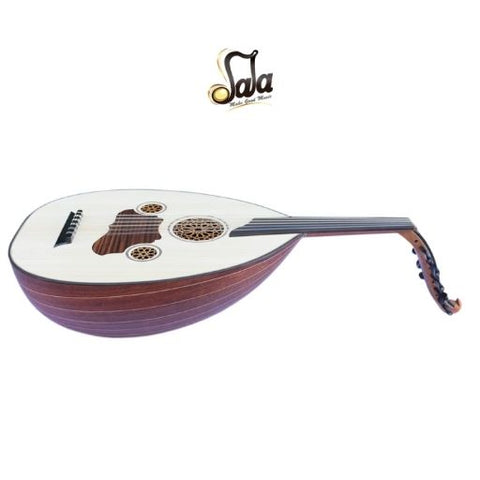
Pielęgnacja po strojeniu
Trzymaj oud z dala od bezpośredniego słońca, grzejników, nagrzanych samochodów i gwałtownych zmian wilgotności. Po grze delikatnie przetrzyj struny i płytę wierzchnią, uwolnij rishę z dłoni i przechowuj instrument w futerale, który dobrze go podpiera. Zwykle nie ma potrzeby luzowania zdrowych strun po każdej sesji.
Jeśli oud ma zostać wysłany, oddany do naprawy albo odłożony na wyjątkowo długo, zapytaj budowniczego, o ile zmniejszyć naprężenie. Całkowite zdjęcie naprężenia też potrafi wpłynąć na mostek i ustawienie instrumentu, zwłaszcza w niektórych konstrukcjach.
Poznaj kolekcję oudów Sala Muzik, przeczytaj kompletny przewodnik po oudzie albo porównaj oudy arabskie i tureckie, zanim wybierzesz instrument czy komplet strun.
Najczęściej zadawane pytania
Jaki jest najczęstszy strój arabskiego oudu?
Szeroko stosowany współczesny strój sześciochórowy to C2–F2–A2–D3–G3–C4 od dołu do góry. Istnieją warianty regionalne i osobiste, więc potwierdź przewidziane ustawienie instrumentu i strun.
Jaki jest najczęstszy strój tureckiego oudu?
Powszechny współczesny układ to D2–A2–B2–E3–A3–D4 od dołu do góry. Część muzyków korzysta z innych strojów koncertowych albo historycznych.
Czy obie struny w chórze powinny mieć ten sam dźwięk?
Zwykle tak. Dwie struny każdego podwójnego chóru stroi się unisono. Najniższy chór basowy to często pojedyncza struna.
Czy na oudzie można używać strun gitarowych?
Nie. Komplety gitarowe nie są przeznaczone do menzury, mostka i wymagań naprężenia oudu. Używaj strun przewidzianych do danego typu oudu i stroju.
Co zrobić, gdy struna wciąż się zrywa?
Przestań ją wymieniać i napinać, dopóki nie sprawdzisz siodełka, mostka i punktów styku w otworze kołka pod kątem ostrych krawędzi. Zweryfikuj też grubość struny, docelowy dźwięk i oktawę. Powtarzające się zerwania w tym samym miejscu to sprawa dla lutnika.
Czy stroić oud do 440 Hz?
A4 = 440 Hz to praktyczne ustawienie domyślne przy ćwiczeniu solo i w wielu zespołach. Twój nauczyciel albo grupa mogą używać innego odniesienia, więc grając z innymi, kieruj się kontekstem muzycznym.


Buon giorno, ho acquistato una muta di corde per oud arabo. Gradirei sapere se il cantino cc (do) deve risultare più acuto o più grave rispetto al cantino e (mi) della chitarra. Grazie.
אתה יכול לכתוב באנגלית?
הסדר סול-רה-לה-מי-רה-לה מלמטה למעלה או מלמעלה למטה?
Dodaj komentarz