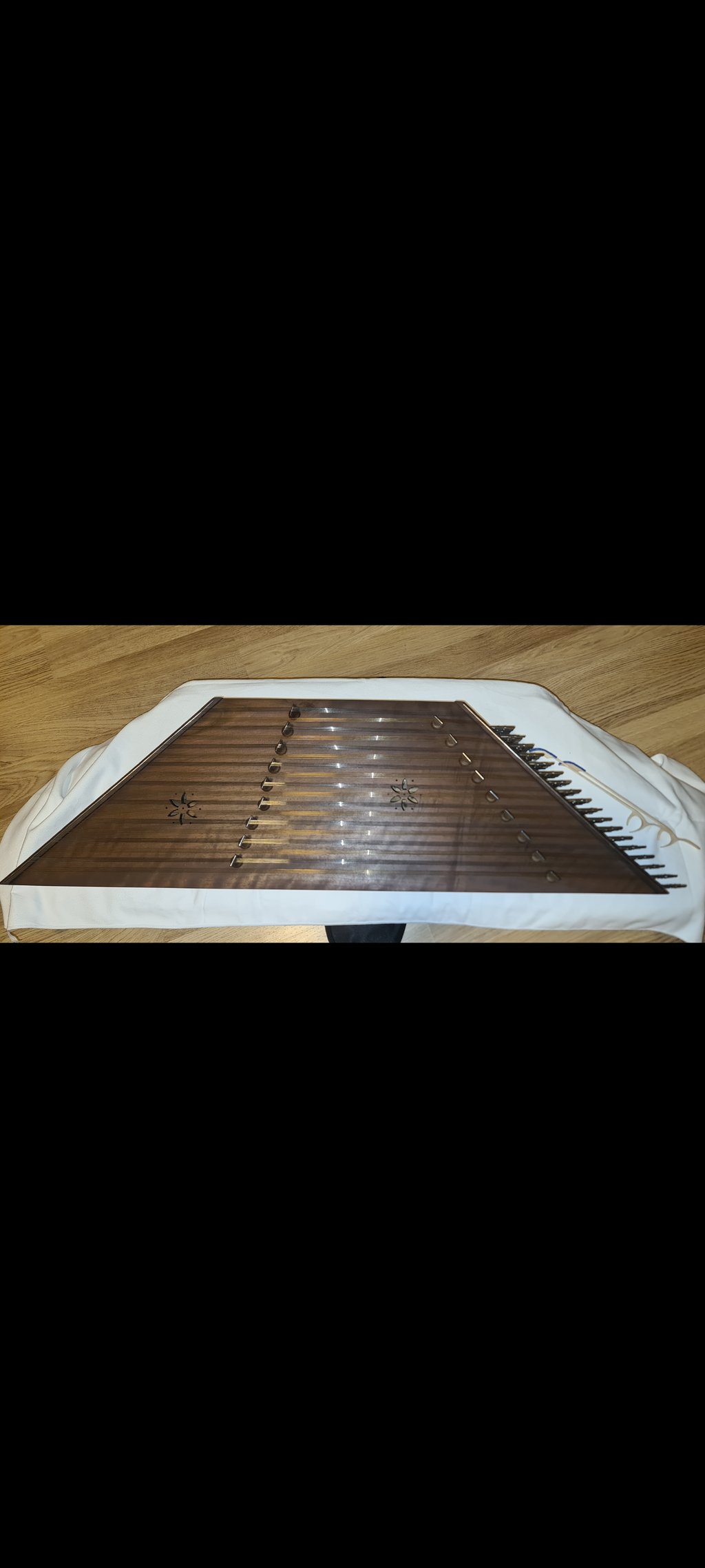


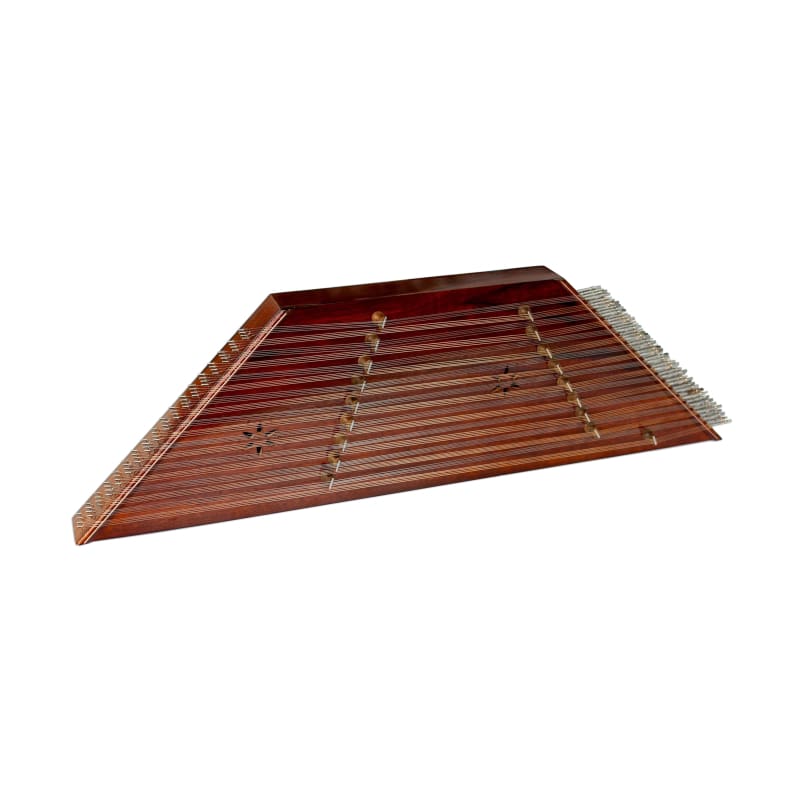
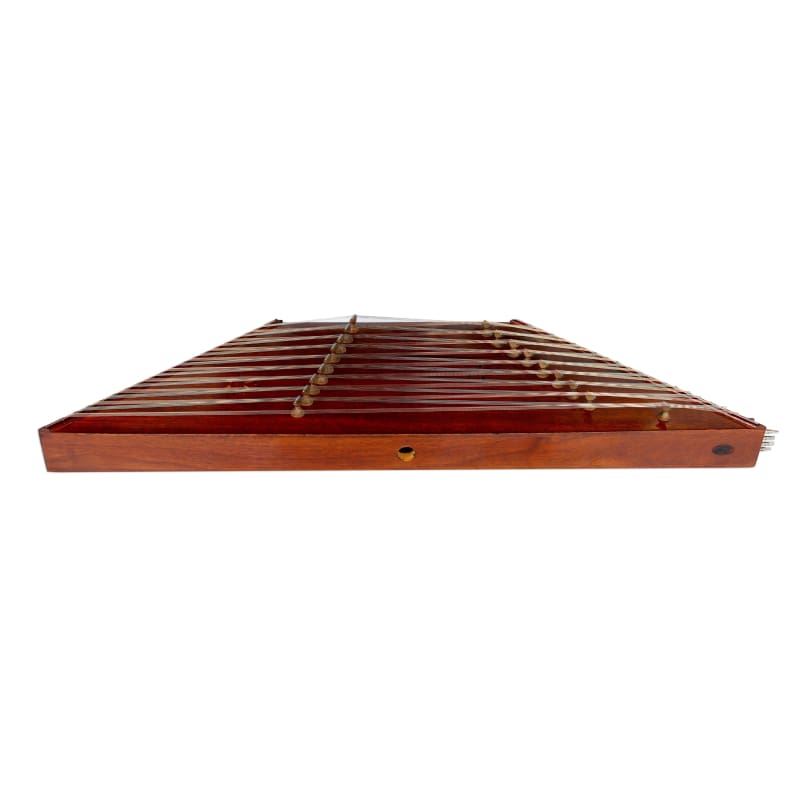
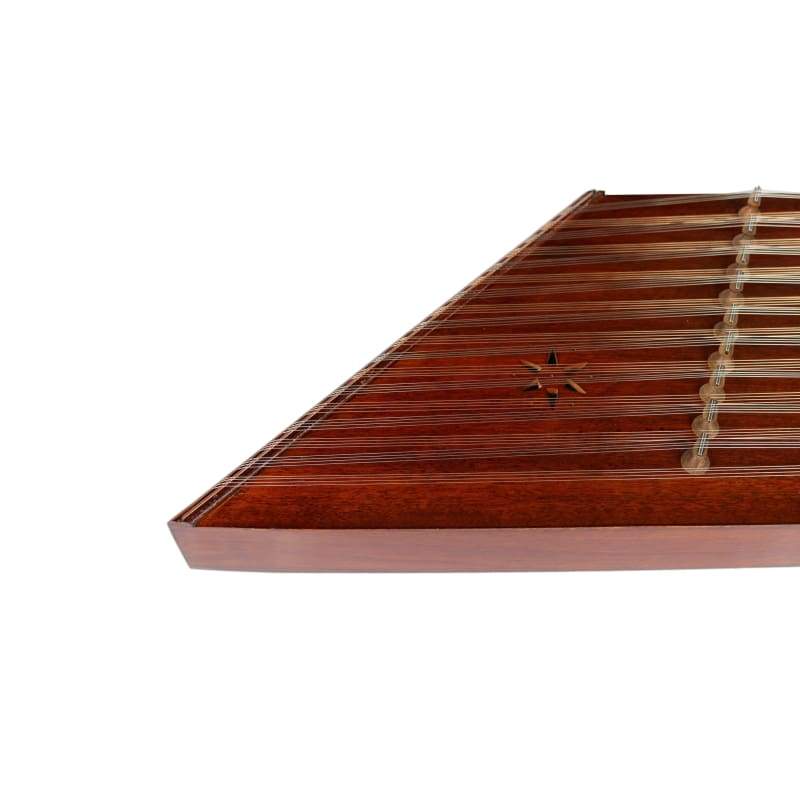
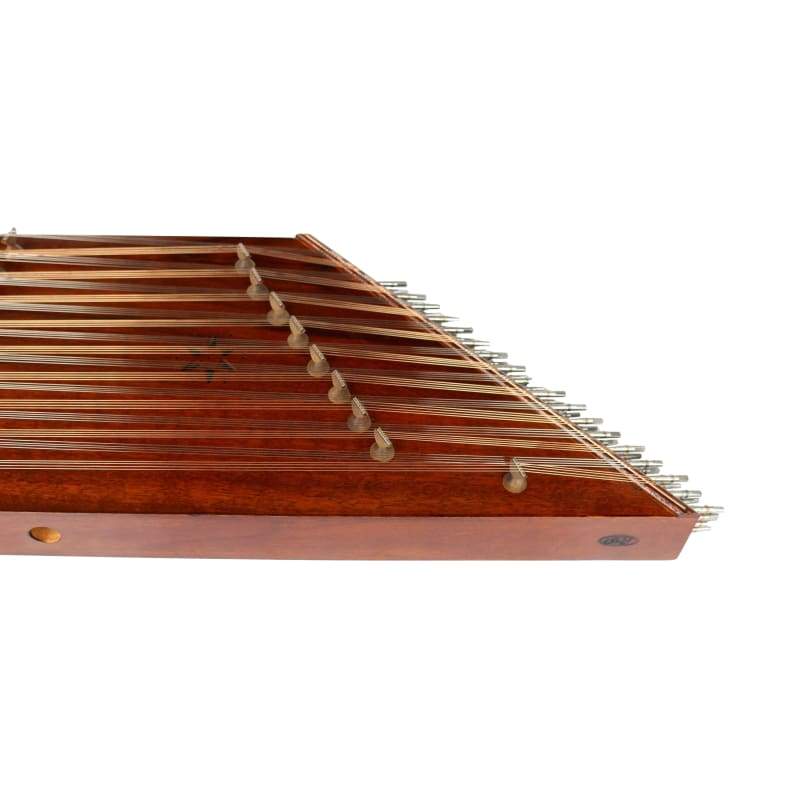
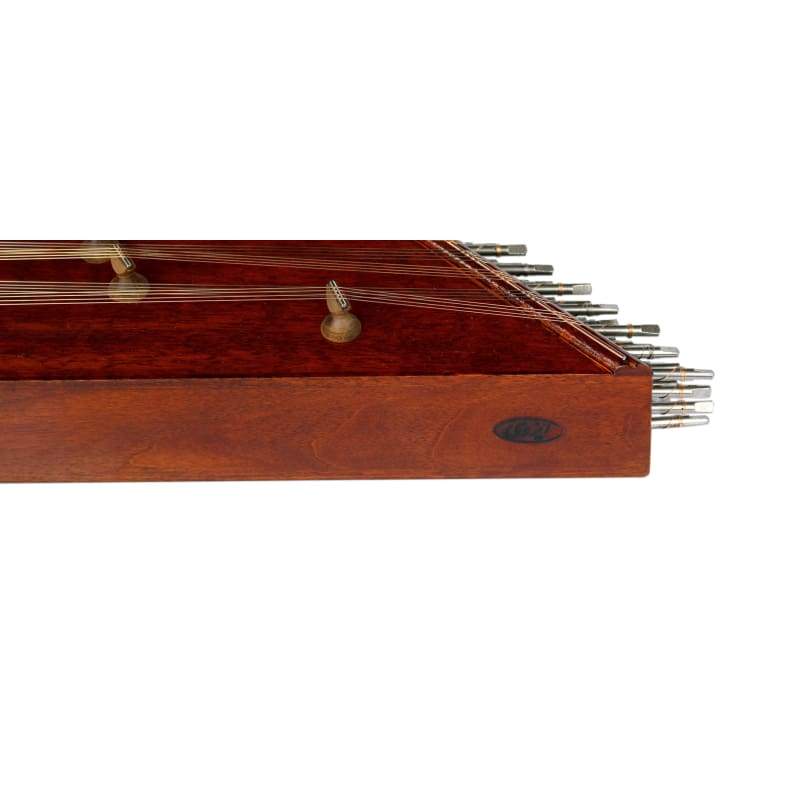
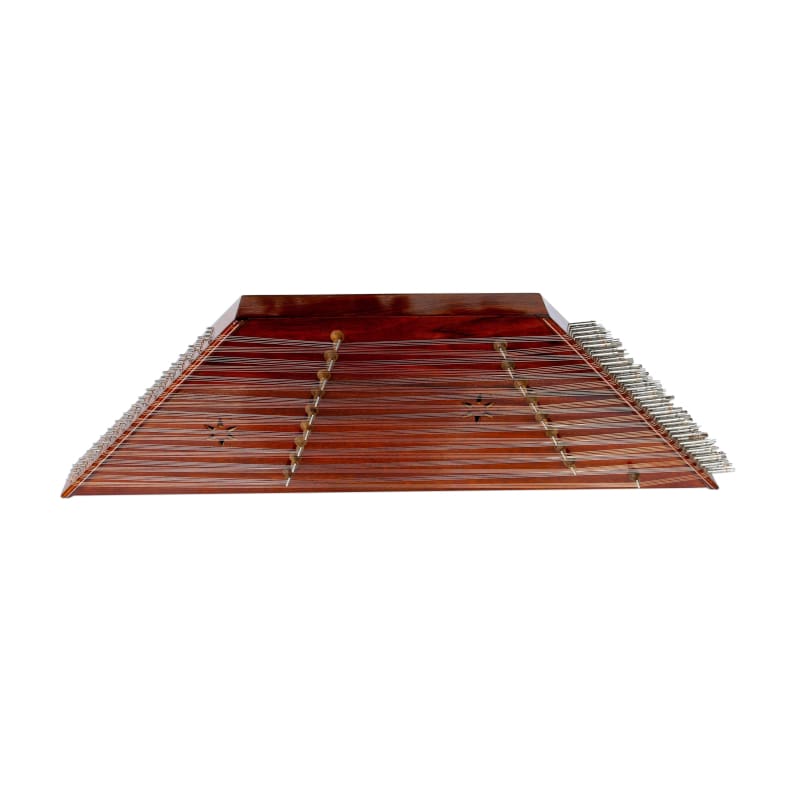
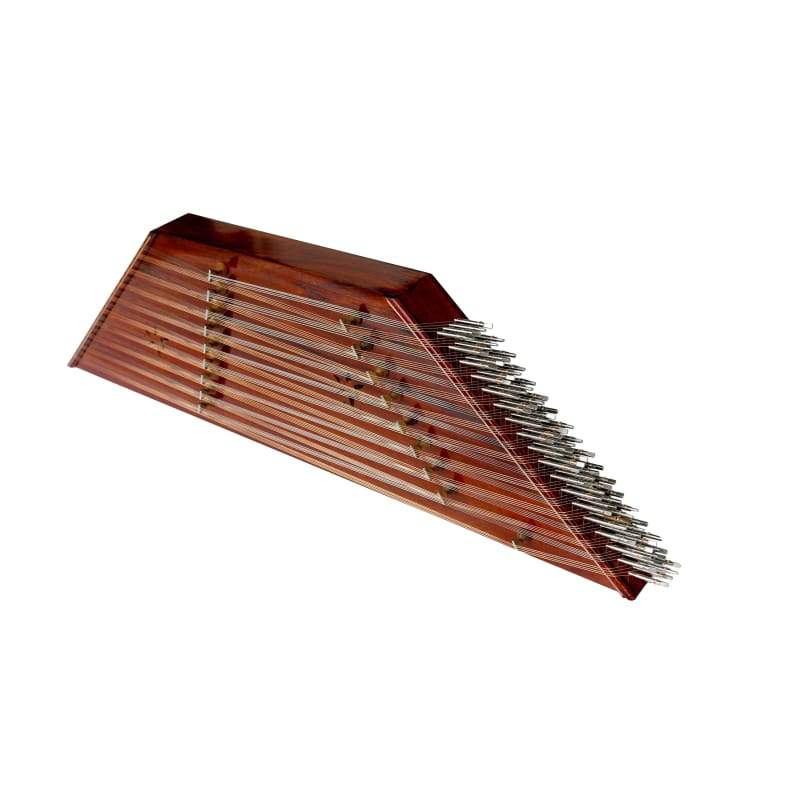
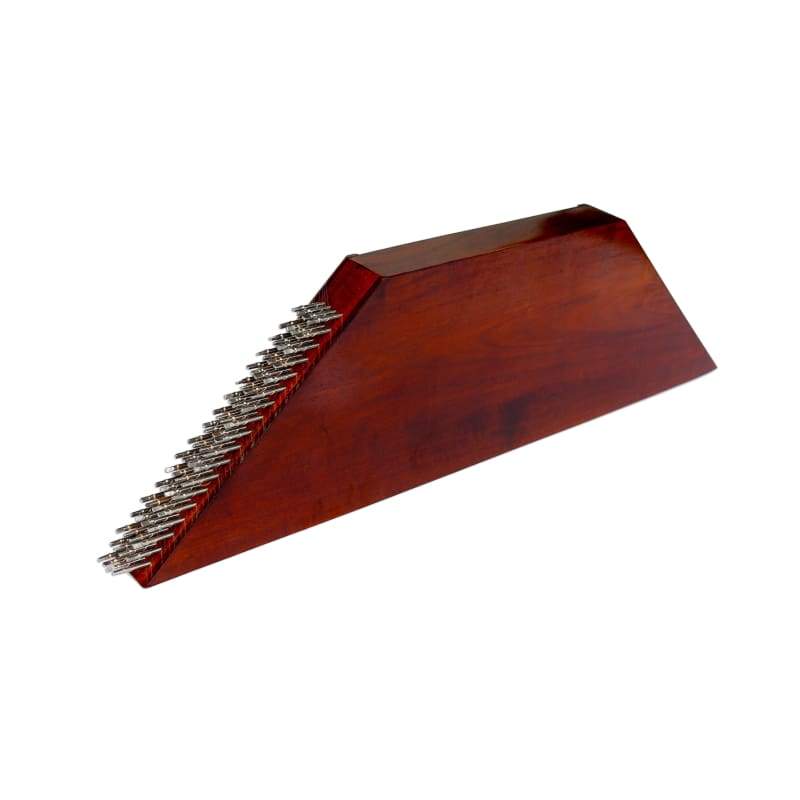
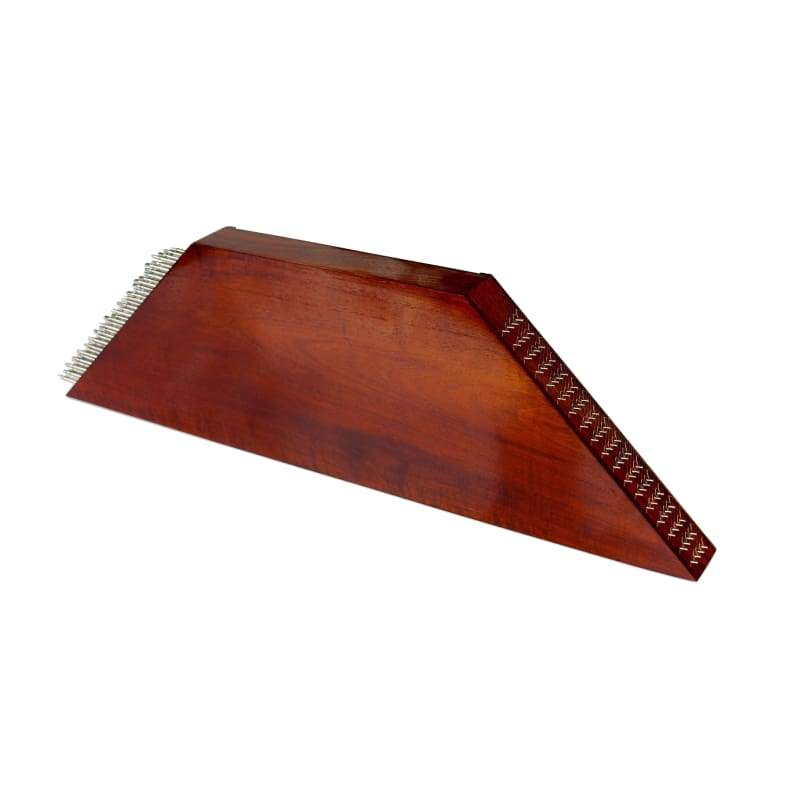
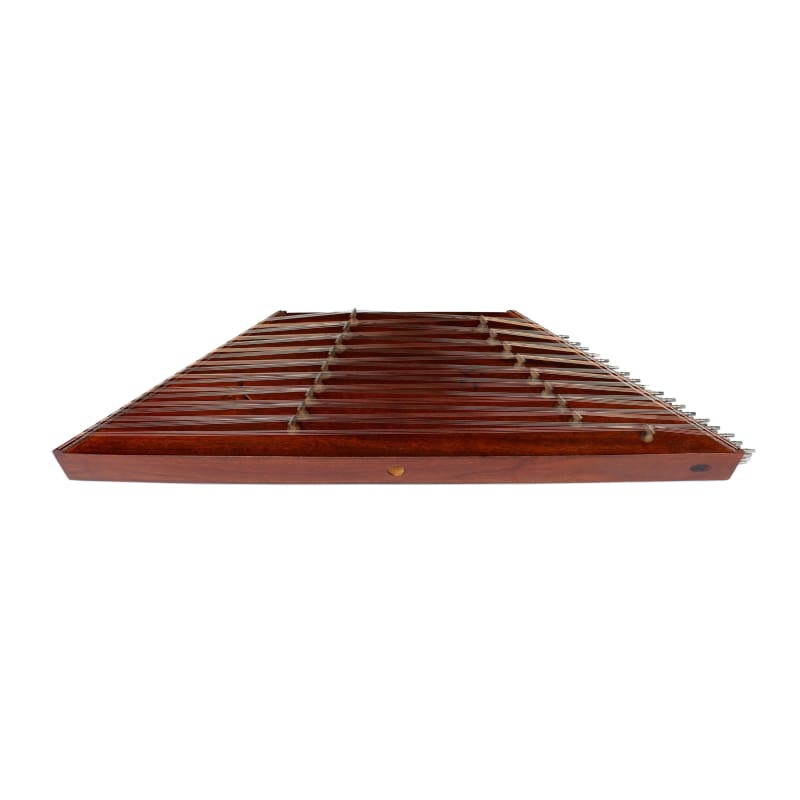
Sert Kutulu Santur NAS-202
- Sınırlı stok – Gönderime hazır

Kaliteli İran Santuru NAS-202
- Akort: Sol dizisi (G)
- Ölçüler: 90 × 26,5 × 7 cm
- Net ağırlık: 2,90 kg (2,80–3,10 kg aralığında)
- Teller: Pirinç ve çelik
- Ağaç: Ceviz
- 9 KHARAK (9 eşik)
Sert kutu, yedek teller, iki mızrap (tokmak) ve akort anahtarıyla birlikte gelir.
Santur hakkında
Yaklaşık 3.500 yıllık bir geçmişe sahip olan santur, adını Tevrat'ta geçen "Psanterin" kelimesinden alır. İbraniler tarafından ve küçük farklılıklarla Mısır'da, Avrupa'da ve İran'da kullanılmıştır.
Türkiye'de 19. yüzyılda ve 20. yüzyılın başlarında, özellikle Santurî Ethem Bey ve Ziya Santur (1862–1952) tarafından kullanılmaya başlanmıştır.
Genellikle cevizden ve benzeri egzotik ağaçlardan yapılmış bir kutu biçimindeki "klasik santur", 72 ila 160 telden oluşur. Bu teller, yine ahşaptan yapılmış küçük tokmaklarla (zahme) vurularak çalınır. Hem telli hem de vurmalı olan çalgılara kordofon denir. Çalgı biçim olarak kanuna benzer.
Santur uzun yıllar Osmanlı müziğinde kullanılmış, pek çok Avrupa ve Asya ülkesinde ise eski çağlardan beri yerleşik bir çalgı olmuştur. Türkiye'de ise Türk müziği sisteminde sağlam bir zemin bulamadığı için sınırlı kalmıştır. Yirminci yüzyılın başından sonra bu çalgıya ilgi yeniden canlanmış, ancak bu ilgi sınırlı kalmıştır.
Kanundan farklı olarak gövdenin iki yanı da yamuktur. İran santuru, ahşaptan yapılmış yamuk bir kutu üzerine gerilmiş üçlü tel gruplarından oluşur. Bu tel gruplarının sayısı zamanla giderek artmış ve çalgının ses genişliği büyümüştür. Teller, göğüs üzerine yerleştirilen eşiklerle iki veya üç gruba ayrılır.
Santur, uçları lastik kaplı küçük tokmaklarla tellere vurularak çalınır.
Orta Çağ'da İran santuru İran'da çok yaygındı. Tarihçiler bu çalgının İran'dan doğudaki ve batıdaki tüm ülkelere yayıldığı konusunda hemfikirdir. Çin yangqin'i bir kenara bırakılırsa, Orta Çağ'da ve sonrasında kullanılan "santur" türündeki tüm çalgılar yamuk biçimlidir.
Siparişimi ne zaman teslim alırım?
Ücretsiz kargo ile teslimat süresi dünya genelinde 3-5 haftadır.
DHL kargo ile teslimat süresi dünya genelinde 2-4 gündür.
Sala Muzik yurt dışına gönderim yapıyor mu?
Şu anda dünyanın her yerine gönderim yapıyoruz.