


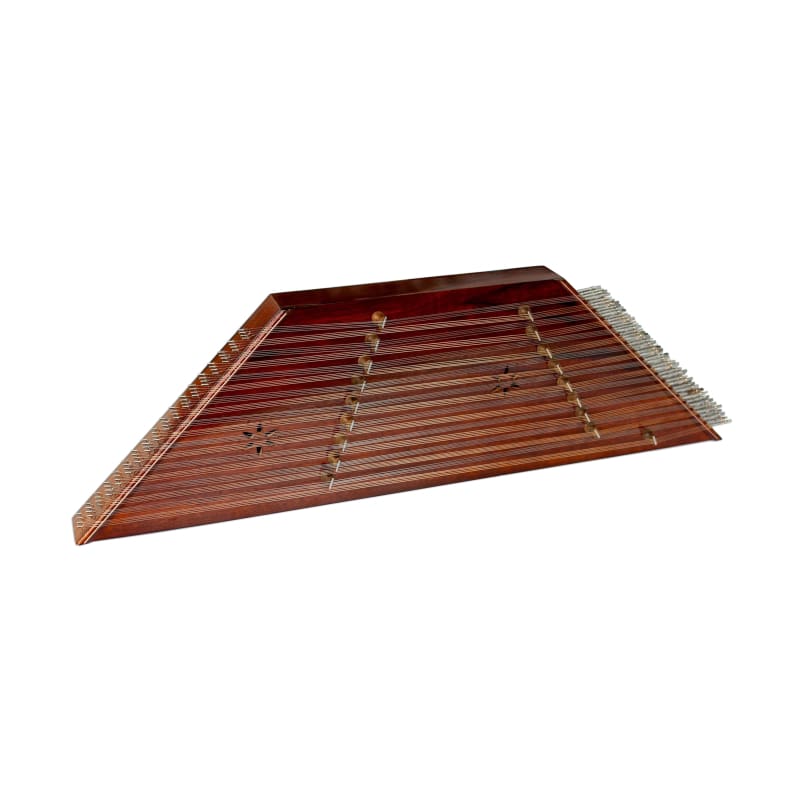
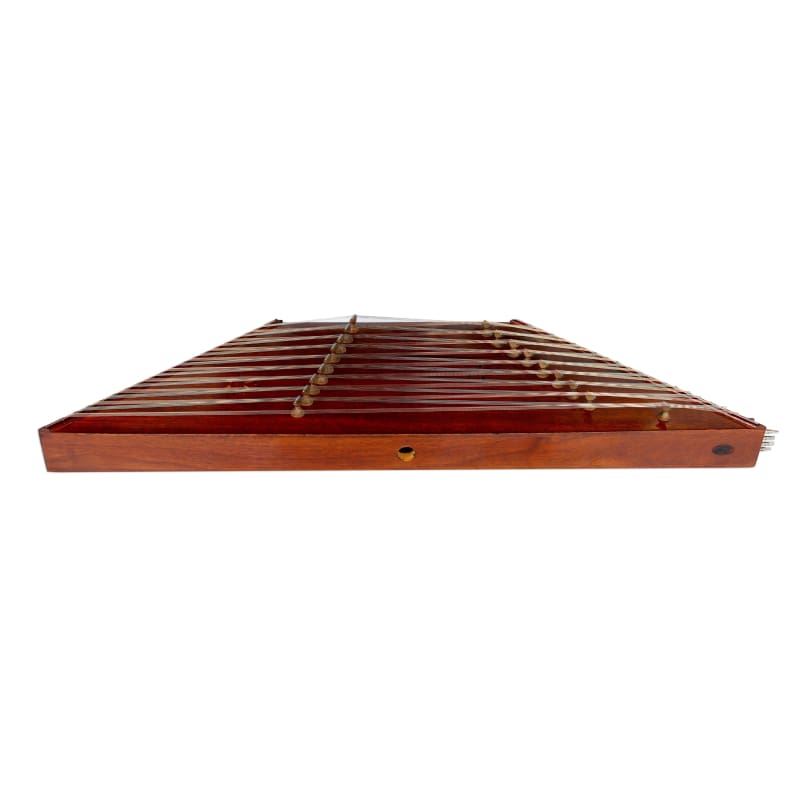
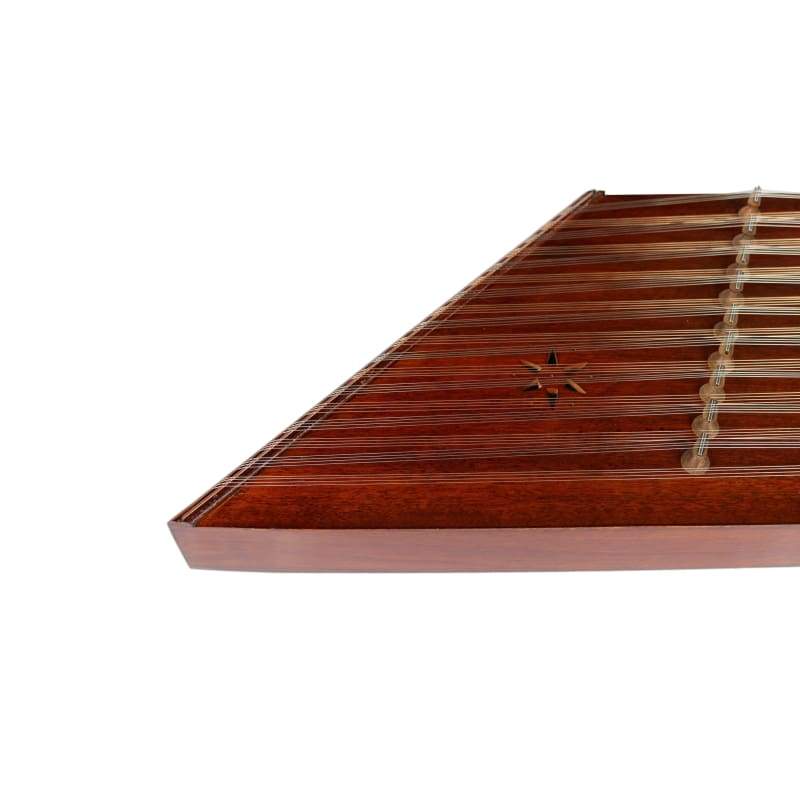
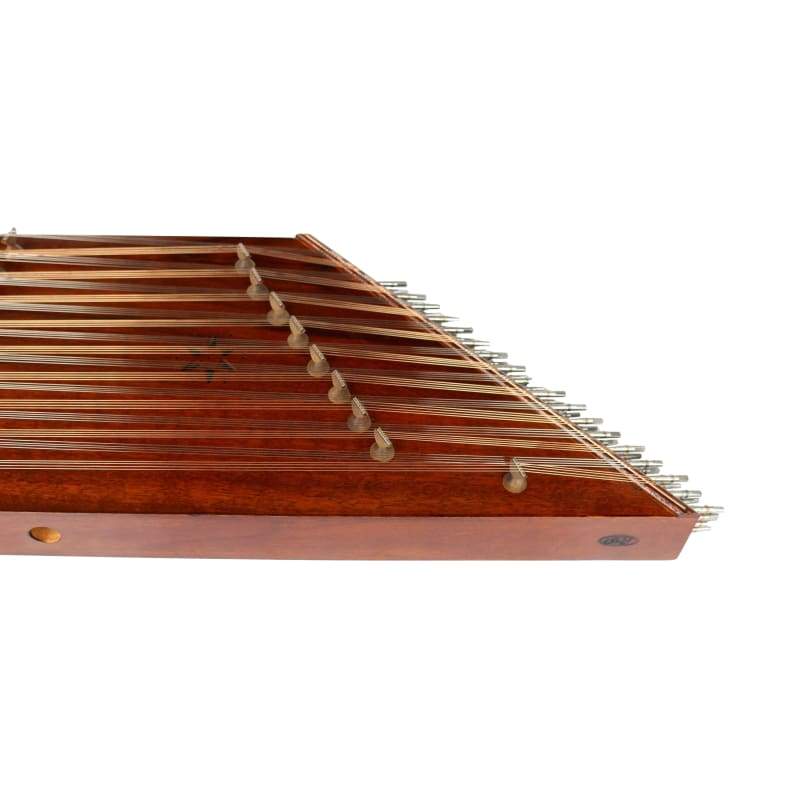
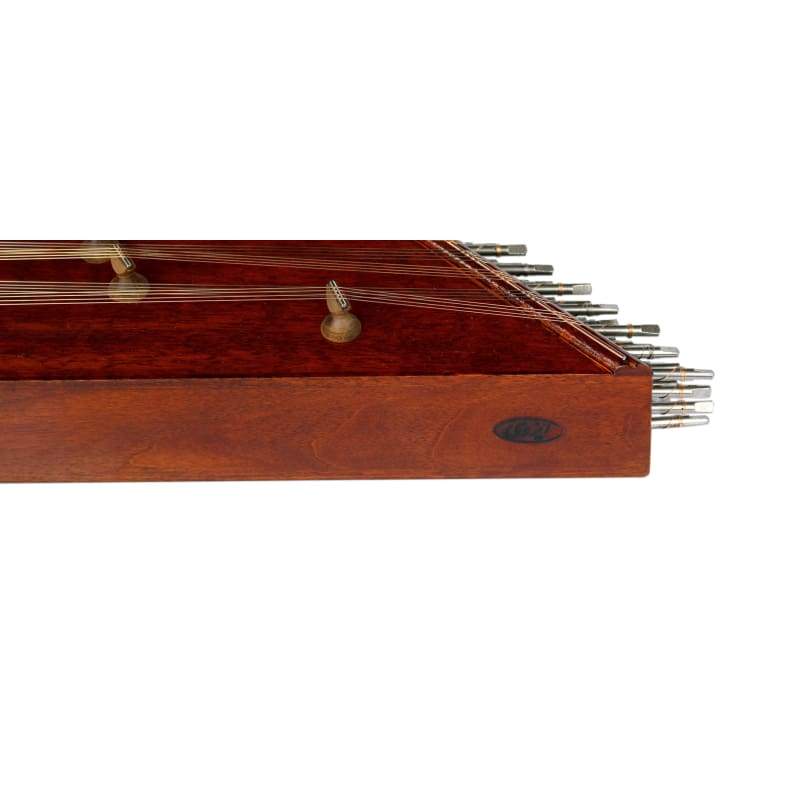
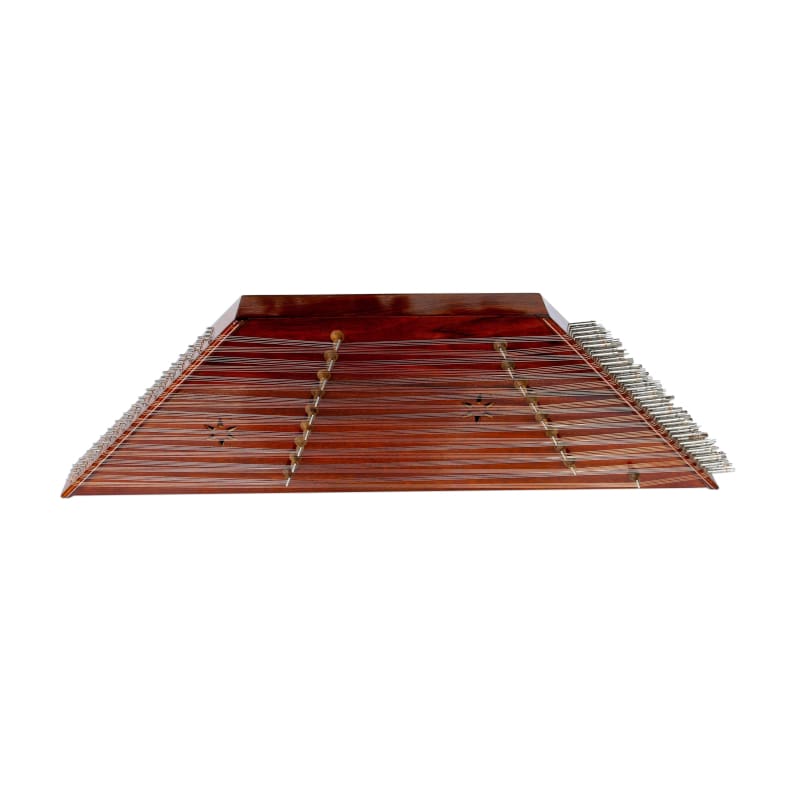
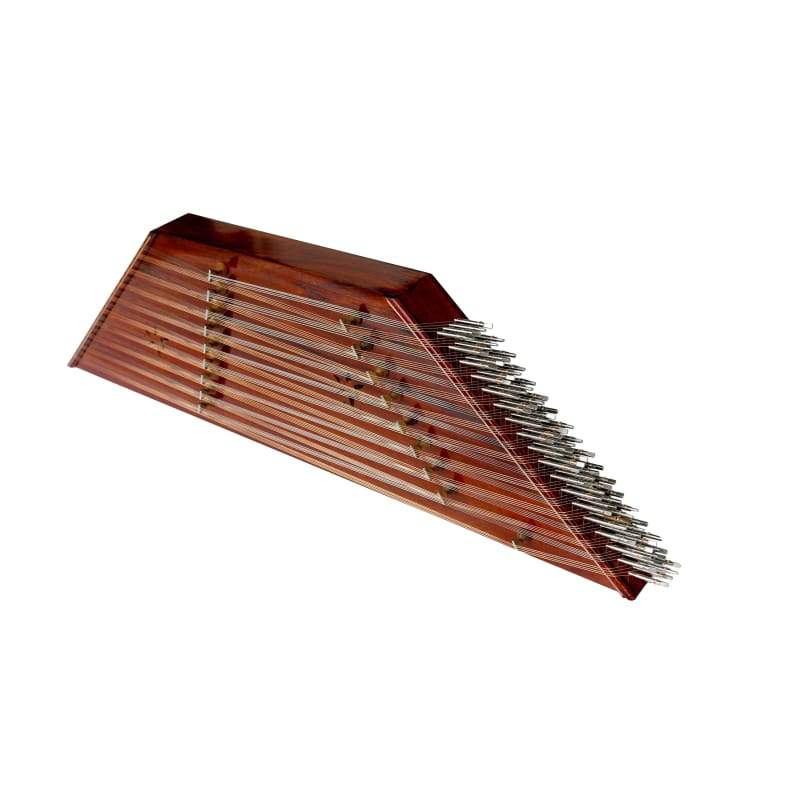
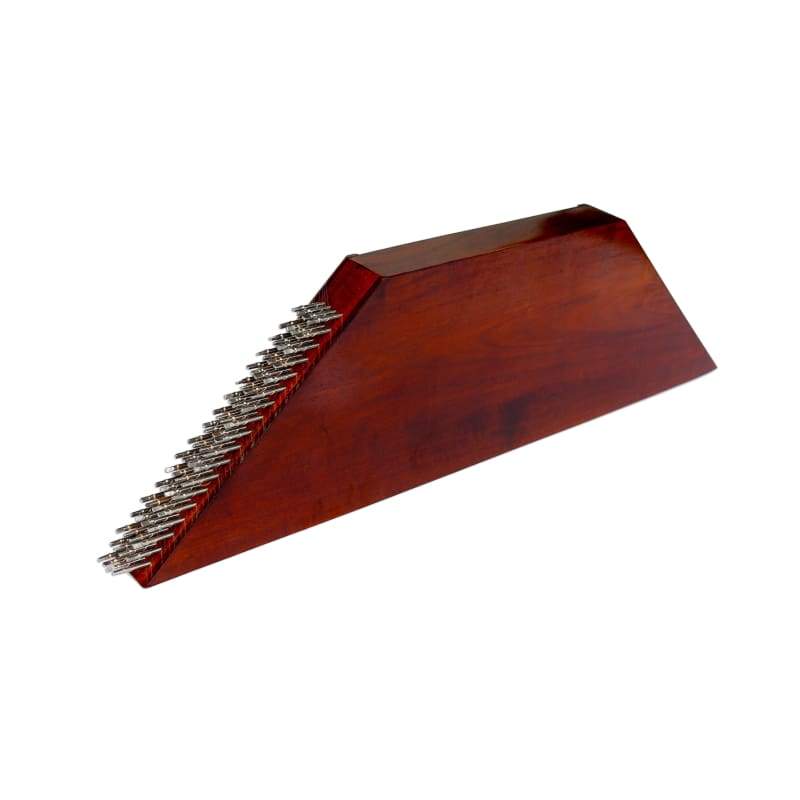
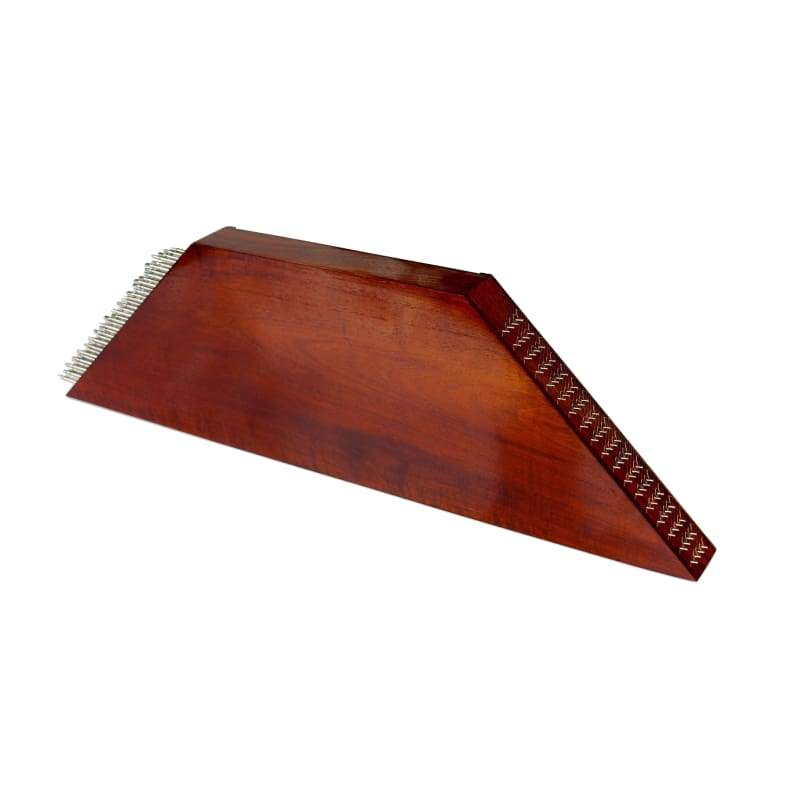
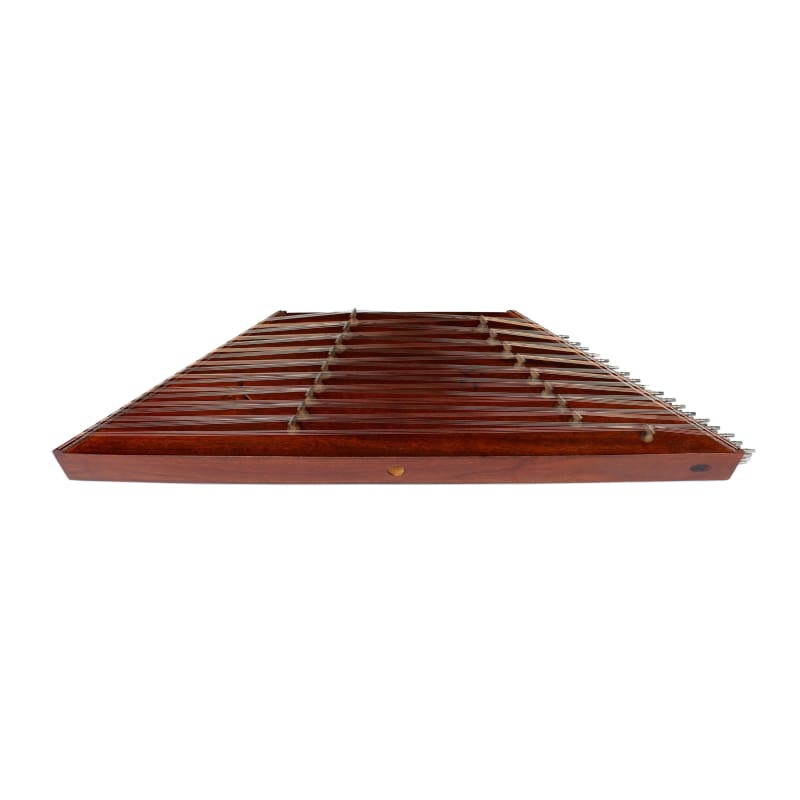
Sert Kutulu Santur NAS-202
- Limited availability – Ready to ship

Quality Persian Santoor NAS-202
- Tuning: G-Scale
- Dimensions: 90 × 26.5 × 7 cm
- Net weight: 2.90 kg (2.80–3.10 kg range)
- Strings: Brass and steel
- Wood: Walnut
- 9 KHARAK (9 bridges)
It comes with a hard case, extra strings, two hammers, and the tuning wrench.
About the Santoor
The santoor, which has a history of about 3,500 years, comes from the word "Psanterin" mentioned in the Torah. It was used by the Hebrews and, with small variations, in Egypt, Europe, and Iran.
In Turkey it began to be used in the 19th and early 20th centuries, notably by Santurî Ethem Bey and Ziya Santur (1862–1952).
A "classic dulcimer," usually in the form of a box made of walnut and similar exotic woods, consists of 72 to 160 strands. These strings are played by tapping with small mallets (zahme), again made of wood. Music instruments that are both stringed and percussion are called chordophones. The instrument is formally similar to the qanun.
The santoor has been used in Ottoman music for many years and is well-established in many European and Asian countries since ancient times. In Turkey, however, it remained a niche instrument due to the absence of proper grounding in the Turkish music system. There was renewed interest in this instrument after the beginning of the twentieth century, though this remained limited.
Unlike the qanun, both sides of the body are trapezoidal. The Persian santoor is made up of groups of three wires stretched on a trapezoidal box made of wood. The number of these wire groups gradually increased over time, expanding the sound width of this instrument. Wires are divided into two or three groups by the bridges placed on the soundboard.
The santoor is played by hitting small hammers with rubber tips on their ends against the wires.
In the Middle Ages, the Persian santoor was very common in Iran. Historians agree that this instrument traveled from Iran to all countries in the east and west. If the Chinese yangqin is left aside, all instruments of the "santoor" type used in the Middle Ages and later are trapezoidal in shape.
When Will I receive my order?
The delivery time by free shipping is 3-5 weeks to worldwide.
The delivery time by DHL shipping is 2-4 days to worldwide.
Does Sala Muzik Ship Internationally?
We currently ship anywhere in the World.


